


Find out early, while changing course is still cheap
MVP Software Development Services
An MVP is the smallest release that puts your idea in front of real users and gets a real answer back. We help you decide what belongs in it, build it properly, ship it instrumented, and read what usage tells you — so the next investment is a decision rather than a hope.
What is an MVP, and when do you need one?
A minimum viable product is the smallest version of your product that real users can do something useful with — built to answer a single question: will anyone actually use this? Everything that does not help answer that question is deferred, not cancelled.
You need one when the riskiest thing about your idea is demand rather than feasibility. If the open question is whether the thing can be built at all, a proof of concept from our research and development team settles it faster and for less. If demand is already proven and the job is to build the product properly, custom software development is the right starting point. An MVP sits between those two.


Proof of concept, prototype, MVP or full build?
These four get used interchangeably and answer very different questions. Choosing the wrong one is the most expensive mistake available at this stage.
| Proof of concept | Prototype | MVP | Full build | |
|---|---|---|---|---|
| Question it answers | Can this be built at all? | Should it work like this? | Will anyone actually use it? | Can it carry the whole market? |
| What you get | A technical spike and a written answer | A clickable design with nothing behind it | A working product in real users’ hands | The full feature set, hardened and supported |
| Who it is for | Your engineers and your investors | Stakeholders and usability testing | Early adopters and first paying users | Everyone you intend to sell to |
| Typical span | Days to weeks | Weeks | Months | Ongoing |
| Do you keep the code | Rarely — it is meant to be thrown away | Design assets only | Yes, the MVP is your first release | Yes |
| Biggest risk | Proving feasibility and stopping there | Reading approval as demand | Cutting so deep the value is unreadable | Building the wrong thing at full scale |
What an MVP settles
A first release is not a cheap version of the product. It is an instrument for answering the questions that are expensive to get wrong.
Real demand, not stated intent
People tell surveys what they would like to exist and then never sign up for it. An MVP shows what they register for, come back to and pay for — and that gap is why a first release ships early rather than complete.
Which features are worth funding
Once a basic set is live, usage separates the features carrying the product from the ones that only sounded good in a planning meeting. You fund the first group and drop the second before either has consumed a budget.
What the engineering has to handle
A month of real traffic tells your architects more about load, data shape and integration behaviour than any amount of upfront design — so you learn where the system must get serious before paying to build that version.
The case for the next round
Boards and investors discount projections, because everyone arrives with projections. Evidence from a product people already use is harder to argue with, which is why many teams treat the MVP as a funding milestone.
How we run an MVP build
The same six steps every time, because the value of an MVP comes from the discipline around it rather than from writing code quickly.
1
Frame the question
We start with the one thing this release has to prove and the users who can prove it. If that will not fit in a sentence, the scope is not ready and we say so before quoting.
2
Cut the scope together
In a working session we sort your backlog into what tests the idea and what waits. This is the meeting that decides whether the MVP succeeds, so we push back here rather than three sprints later.
3
Design the thin path
Our designers map the single journey a user has to complete end to end. Everything off that path becomes a stub, a manual back-office step, or nothing at all until results say otherwise.
4
Build in short sprints
A team of engineers, QA and designers ships working increments you can use every couple of weeks. Test-driven development keeps the result usable by real people, not just along one rehearsed click path.
5
Ship it instrumented
The release goes live with analytics, error tracking and a feedback channel from day one. An MVP without measurement is just a small product, and it answers nothing.
6
Read the evidence and decide
We separate what usage shows from what we would conclude, and you decide: continue, redirect or stop. All three are legitimate, and the engagement is scoped so stopping stays affordable.
What we deliberately leave out of release one
Cutting scope is only honest if you say what is being cut and why. Here is what usually comes out of a first release, and what it costs you to put it back later.
Back-office and admin tooling
Internal screens are often the largest part of a first build and the least urgent. Early on we run those operations manually, and build the tooling once volume makes that impractical.
Exhaustive edge-case handling
A first release covers the paths users will take and fails safely elsewhere. Chasing every branch before anyone has used the product spends budget on cases that may never occur.
Scale engineering
Caching layers, sharding and multi-region deployment solve problems you do not have yet. We keep the architecture from blocking them and leave the work until traffic justifies the cost.
Configuration and preferences
Themes, settings screens and per-user options are where scope quietly doubles. Ship sensible defaults — the options users ask for cost less than the ones you guessed at.
Bring us the idea and the deadline. We will tell you what fits into a first release and what does not.
Schedule a free-of-charge scoping session with our experts.
Industries in Focus
Each sector changes what can safely be left out of version one.
Marketing & Advertising
Campaign, audience and analytics tooling, tested against the people who run it daily.
Healthcare
Patient, clinician and integration journeys, with data handling treated as a requirement rather than a later phase.
Automotive
Connected-vehicle, fleet and in-car software validated with every stakeholder in the chain in mind.
Cybersecurity
Security tooling where even the first release has to be defensible, scoped with our security engineers involved.
Fintech
Payment, lending and reporting products where the regulated parts of the journey cannot be stubbed out.
Game Development
Playable slices put in front of real players early, because nothing else tells you whether a mechanic works.
FAQs about MVP Development
An MVP’s ultimate purpose is to bring answers to the questions every business faces, regardless of the industry. Here are the ones clients ask us before starting.
Is the product worth being deployed, developed, and scaled further?

What is the user’s perspective of the product and how can we acquire it?
What are the features to keep, develop, add, and remove?
How do you decide what goes into the first release?
How long does an MVP take to build?
What does an MVP cost?
Is an MVP the same thing as a prototype?
Do we own the code, the designs and the research?
What happens after the MVP launches?
Related insights
More on scoping a first build, choosing a partner, and what an offshore team costs.
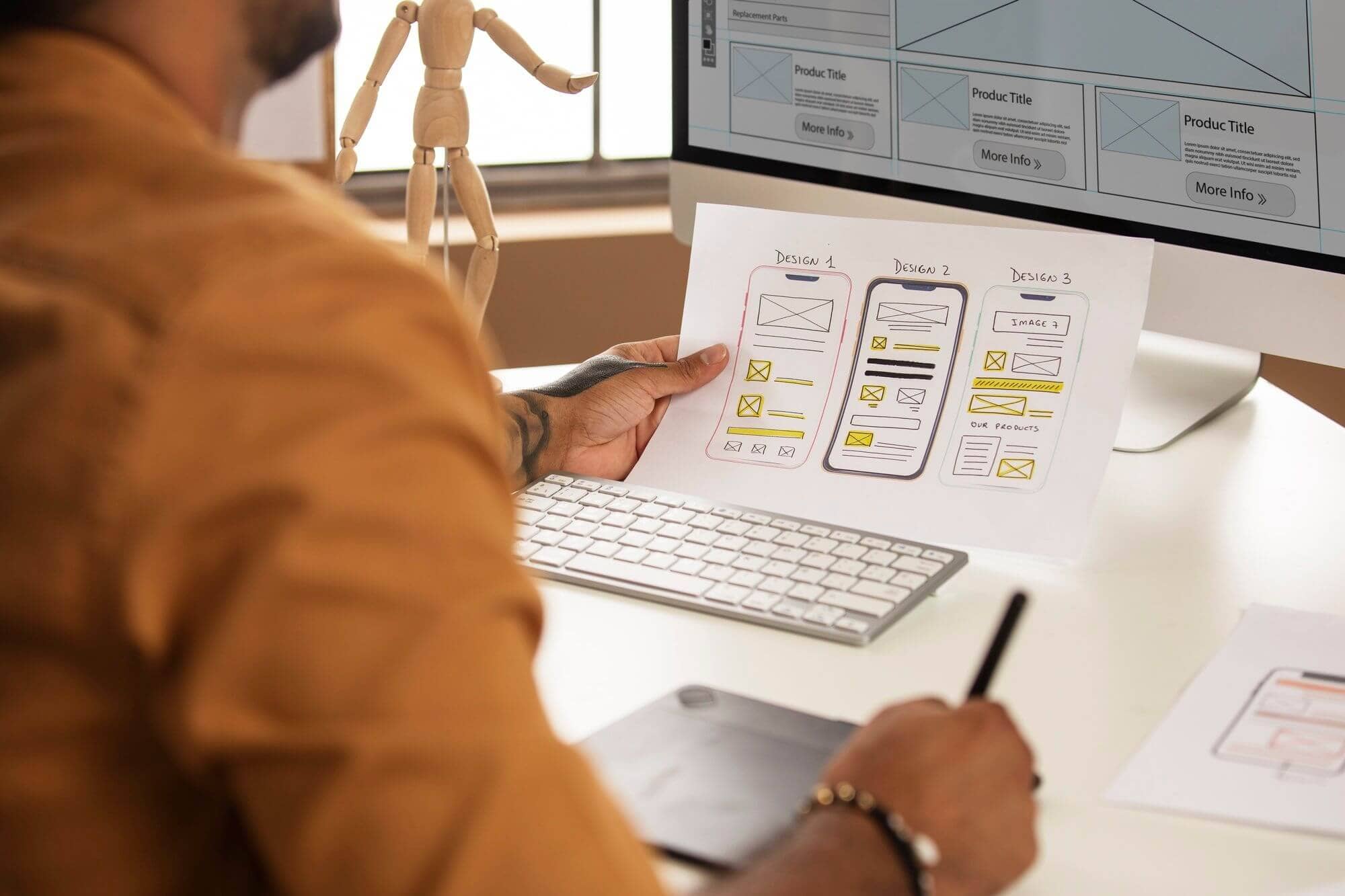 Mobile App Development Outsourcing: How to Choose Right
Outsourcing mobile app development is a proven strategy. Learn how to pick the right partner, scope the work, and get the best result.
 How to Choose a Software Development Company
A practical guide to choosing a custom software development company: criteria, questions to ask, red flags and engagement models that protect your budget.
 How Much Does an Offshore Dev Team Cost?
What does an offshore development team cost? Typical rates by region and seniority, monthly team costs, and how to keep the budget predictable.
 Small Business Digital Transformation Guide
Digital transformation for small business: which changes actually pay back, what they cost, and how to sequence them without stalling the team.
Ready When You Are
Tell us what you are trying to find out. Fill in the contact form below and we’ll come back to you with a scope, a range, and the parts we would cut.
We reply within 1 business day.
Thank you!
Your message has been successfully sent. We will contact you very soon!